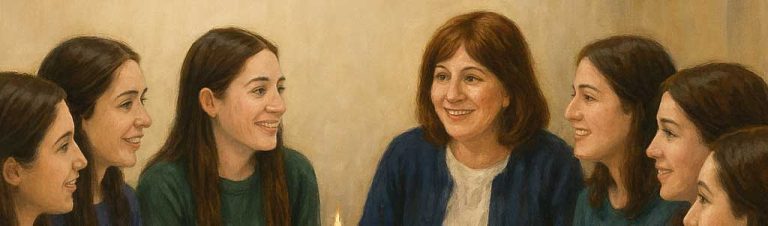


Challah, a simple yet profound mitzvah, carries deep spiritual significance for Jewish women. In her recent class at Torah Day School of Dallas, and cosponsored by TDSD, Mesorah High School for Girls and Ohev Shalom, Mrs. Suri Jaroslawitz explored the layers of meaning behind the mitzvah of hafrashas challah, inspiring a renewed appreciation for its timeless relevance and transformative power.
From Pain to Purpose
The Torah commandment to separate challah, lehafrish challah min ha’eisa, holds more than just a physical act. The word machala (illness) is hidden within the mitzvah’s name, teaching that through this act, we elevate and transform pain into purpose. Challah reminds us that we, as women, can take anything—even challenges—and turn them into spiritual growth.
Above the Natural Order
The word “challah” hints at something chutz l’derech hateva, beyond the natural order. This reflects the unique role of women, who, through mitzvos such as challah, elevate the physical world into holiness. While men require a quorum of ten to sanctify Hashem’s name, women embody this sanctity in their homes with the number seven, the spiritual total of mitzvos uniquely tied to women.
A Holy Role in the Home
Women are the kohanim gedolim of their homes, irreplaceable in their role as spiritual leaders. Just as the Kohen Gadol would enter the Kodesh HaKodashim on Yom Kippur, every time we separate challah, we create that same sacred space in our own homes. This act elevates our kitchens to the highest spiritual realms. Mrs. Jaroslawitz encouraged women to remember their unique ability to bring Hashem into the home, saying, “Your dough rises, and so does your bracha.”
Mrs. Jaroslawitz encouraged women to remember their unique ability to bring Hashem into the home, saying, “Your dough rises, and so does your bracha.”
A Spiritual Reset
When a woman makes challah, she completes all 613 mitzvos symbolically, akin to finishing the entire Torah. The process becomes a spiritual reset, leaving her as pure as a newborn baby. With Hashem’s heart especially open during this mitzvah, it’s a unique time to daven for personal and family needs. Adding eggs to the dough? Pray for shalom bayis and children. Using flour? Daven for parnasa. Every ingredient is a vessel for prayer.
Daily Purpose and Kiddush Hashem
Mrs. Jaroslawitz emphasized the importance of striving for a daily connection with Hashem. “Every night, ask yourself: What did I do today for Hashem? If you can’t think of anything, get up and do it—even in the middle of the night.” Every act of kindness or mitzvah sanctifies Hashem’s name, bringing holiness to the world.

Generational Legacy
Challah connects us to past and future generations. As we knead the dough, we instill blessings into the lives of our children and future homes they will build. “We don’t raise children to keep them,” said Mrs. Jaroslawitz. “We raise them to create their own homes to serve Hashem.” With every kesubah, each Jewish bride receives her key to open the gates of Heaven for her new home.
Prayers for Shidduchim and Shalom
During the shidduch process, Mrs. Jaroslawitz suggested reciting Chapter 22 of Tehillim and a special tefillah for chein (grace). She reminded her audience that when women work on their character and maintain a good name, they leave a legacy of faith and strength. Just as oil spreads, so too does the reputation of a person’s deeds.
Transforming the World Through Challah
The mitzvah of challah is a microcosm of a woman’s role in Jewish life. Just as an earthquake is Hashem shaking the heavens, our prayers and mitzvos reverberate spiritually, shaking the foundations of the world. Women are the saviors of Bnei Yisrael, infusing their homes and communities with holiness.
Conclusion
Through the mitzvah of challah, women have the power to turn their homes into sanctuaries, their lives into vessels of sanctity, and their challenges into blessings. As Mrs. Jaroslawitz concluded, “Every time you take challah, your home becomes the Kodesh HaKodashim. In that moment, you are creating a place where Hashem’s presence dwells.”
May the mitzvah of challah continue to elevate and inspire Jewish women across the generations. ■
By Nechama Zakon
Mesorah Student