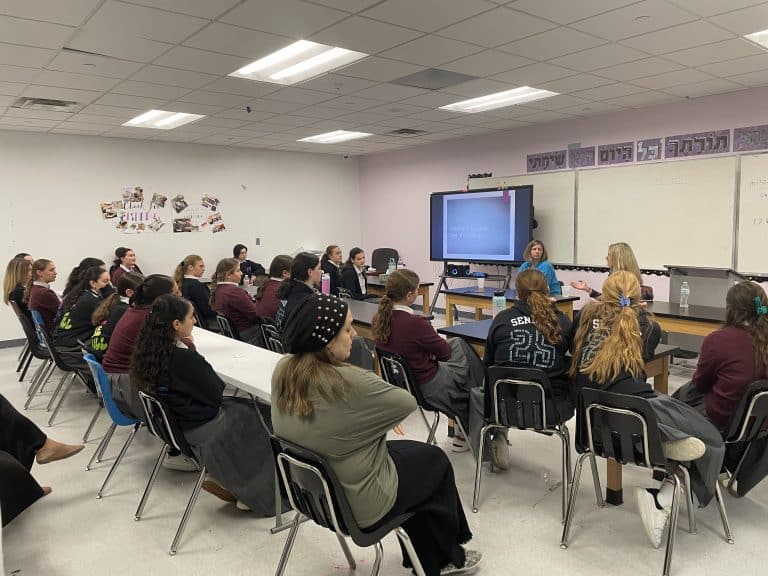


Succos, known as “Zman Simchaseinu,” the time of our joy, follows the deeply introspective days of Yom Kippur. How can we transition from the solemnity of Yom Kippur into the joy of Succos? Mrs. Ela O’Connor’s workshop on this topic provided practical steps to bridge the gap between these two spiritual peaks.
The Power of Self-Perception
The workshop began with an exercise in self-reflection. Participants were asked to write down five words that describe themselves—words they feel about themselves or hear from others. Then, they were challenged to write a sentence without using any of those words, which revealed how deeply internal and external narratives shape our identities. The exercise was designed to show that we often form stories about ourselves that we work to uphold, consciously or unconsciously.
Mrs. O’Connor emphasized that much of our inner dialogue can restrict us from growing. We are often so invested in maintaining these stories that we don’t allow room for change, even when that would benefit us. This barrier must be acknowledged and overcome, particularly when seeking personal growth during Yom Kippur and Succos.
Yom Kippur: The Day of Introspection
On Yom Kippur, we say Al Cheit, confessing our sins and reflecting on our shortcomings. One sin Mrs. O’Connor focused on is imutz halev—stubbornness or the inability to admit when we are wrong. Drawing from her experience as a school principal, she shared how she once believed she would revolutionize education without anyone’s help. However, she realized over time that her resistance to accepting assistance was rooted in pride and fear of being wrong.
This concept applies universally: Many of us resist growth because we don’t want to admit that we need help or have made mistakes. But the essence of Yom Kippur is the willingness to change, admit our faults, and seek improvement.
Rav Leuchter’s Insight: The Motivation Behind Our Actions
Rav Leuchter teaches that on Rosh Hashanah, we are judged on our actions and their motivations. Why do we do what we do? Are we striving for personal fulfillment or simply living up to the stories we’ve created about ourselves? This reflection sets the tone for Yom Kippur, where we dig deep to understand the why behind our behaviors and choices.
Succos: The Time of Joy
How does this intense introspection lead to joy on Succos? The key is clarity. Mrs. O’Connor explained that after the soul-searching of Yom Kippur, we can experience true joy because we have clarity about who we are and where we want to go. When we strip away distractions and focus on our true selves, there is no greater joy than that sense of clarity.
Succos is a time to focus on the joy of becoming. As we sit in the succah, with its open roof that allows us to see the stars, we are encouraged to look up and dream about the person we want to become. The schach, through which we glimpse the heavens, symbolizes the spiritual clarity we gained on Yom Kippur. This clarity fuels our joy.
Bein Adam Latzmo: The Relationship with Ourselves
While much of our spiritual focus is on bein adam l’chaveiro (our relationships with others) and bein adam l’makom (our relationship with Hashem), Mrs. O’Connor pointed out that we often neglect bein adam latzmo—our relationship with ourselves. When do we take the time to reflect on who we truly are, outside of how others see us? Succos gives us this opportunity. It is a time to think about what makes us good, to acknowledge our strengths, and to use this self-awareness as motivation for further growth.
Bringing Yom Kippur into Succos
Mrs. O’Connor’s challenge was simple yet profound: Bring Yom Kippur into your Succos. Take the reflections from Yom Kippur and let them guide you during Succos. What do you want to change about yourself? Succos is the time to start working on it. True Simcha comes when we see progress in our personal development, when we align our actions with our deeper goals and aspirations.
Conclusion: From Reflection to Joy
By moving from introspection on Yom Kippur to joy on Succos, we experience a complete spiritual transformation. The joy of Succos is not just about external celebrations but about the internal clarity and motivation to improve. As we sit in our succah, looking at the stars, we are reminded to dream about who we want to become—and then take concrete steps to make those dreams a reality.
Simcha, after all, is not just about feeling good at the moment but about living a life aligned with our deepest values and aspirations. The clarity we gain through introspection is the key to true, lasting joy. ■