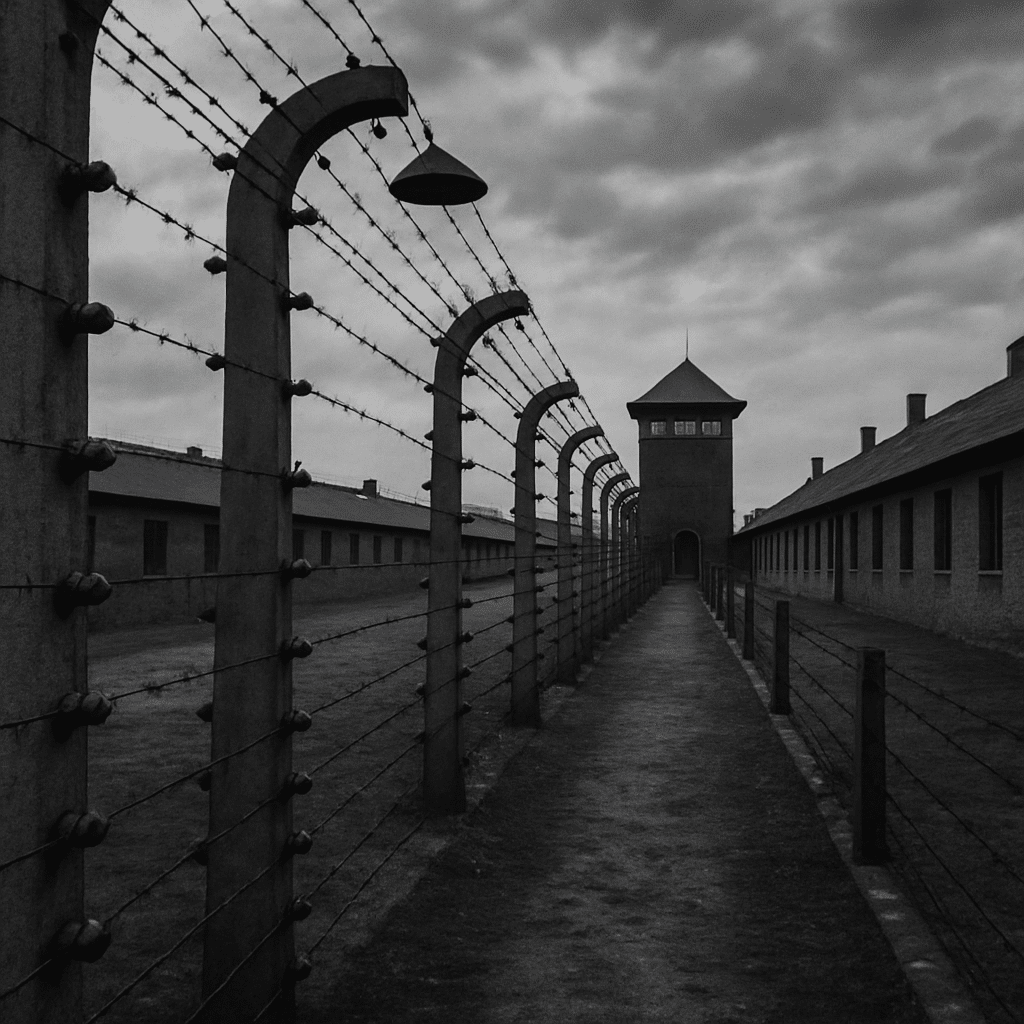


Last week, our school went to the Holocaust Museum together. It wasn’t just another school trip, and honestly, it didn’t feel like one. The whole day carried a certain weight. Almost as if we were walking into a place that holds more than just history. It holds pain. It holds kedoshim. And it has responsibility.
Inside the museum, everything hit hard. There were parts that, honestly, I didn’t want to look at. There were pictures of children who looked like my friend’s little siblings, rooms filled with names, and stories of people who tried to hold onto their Yiddishkeit until their very last moments. There was a section with torn-up siddurim and tefillin, and a burnt Chumash that someone had risked their life to save. That image stuck with me the most. A sefer so charred it could barely be read, let alone studied, but someone still held onto it like it was life itself. Because at the end of the day, that Chumash, that source of Torah, was their life itself
That’s when a certain pasuk came to mind. It’s one I once heard a survivor quote in a speech, and I never forgot it:
“אַף כִּי אָשֵׁב בַּחֹשֶׁךְ, ה׳ אוֹר לִי” (מיכה ז:ח)
She said that in the camps, when she was completely in darkness. Either physically, emotionally, or spiritually, she would whisper this pasuk to herself. “Even if I sit in darkness, Hashem is my light.” It didn’t change her situation. But it reminded her that even when there was no light, she could still see Hashem. Hidden, maybe, but there.
Walking through the museum with that pasuk echoing in my mind changed everything for me. It made me realize that the Holocaust wasn’t just about people dying Al Kiddush Hashem it was about people surviving Al Kiddush Hashem. It was about people living, even in Gehinnom, with אמונה, davening with broken voices, risking their lives to light Chanukah candles, teaching each other Torah in whispers, and holding onto something bigger than the world around them.
By the end of the day, I wasn’t thinking about history anymore. I was thinking about identity. I’m part of the same עם ישראל that walked into those camps and still said שמע. I’m part of the nation that whispers pesukim in the dark, and believes that somehow, Hashem is still holding us, even if we don’t understand how.
The Holocaust Museum isn’t just a place of remembering. It’s a place that asks: now that you’ve seen this, what are you going to do with it? How are you going to live as a Jew?
And I think for all of us, that question will stay with us way longer than just our school trip. All of us at Mesorah High School were incredibly grateful for the opportunity to walk even for a second through history.
Liora Goldberg
10th Grade, Mesorah High School for Girls